


Word Search Zen
PlaySimple Games
I enjoy word games most when they are easy to start but still give my attention something useful to do. Word Search Zen fits that mood with a travel-themed take on classic word-search puzzles. I can open it for a short break, scan a grid at my own pace, and put it down without feeling that I have abandoned a complicated campaign. That simplicity is its main appeal, but it also means the game will not suit everyone.
Developed by PlaySimple Games, this free word game is aimed at players who like finding hidden words rather than building a character, competing in real time, or learning a large set of rules. Its setting gives the familiar puzzle format a sense of movement, while the core activity remains deliberately calm. After spending time with it, I see it as a good companion for commutes, waiting rooms, quiet evenings, and anyone who wants a low-pressure mental exercise.
How the current version feels to play
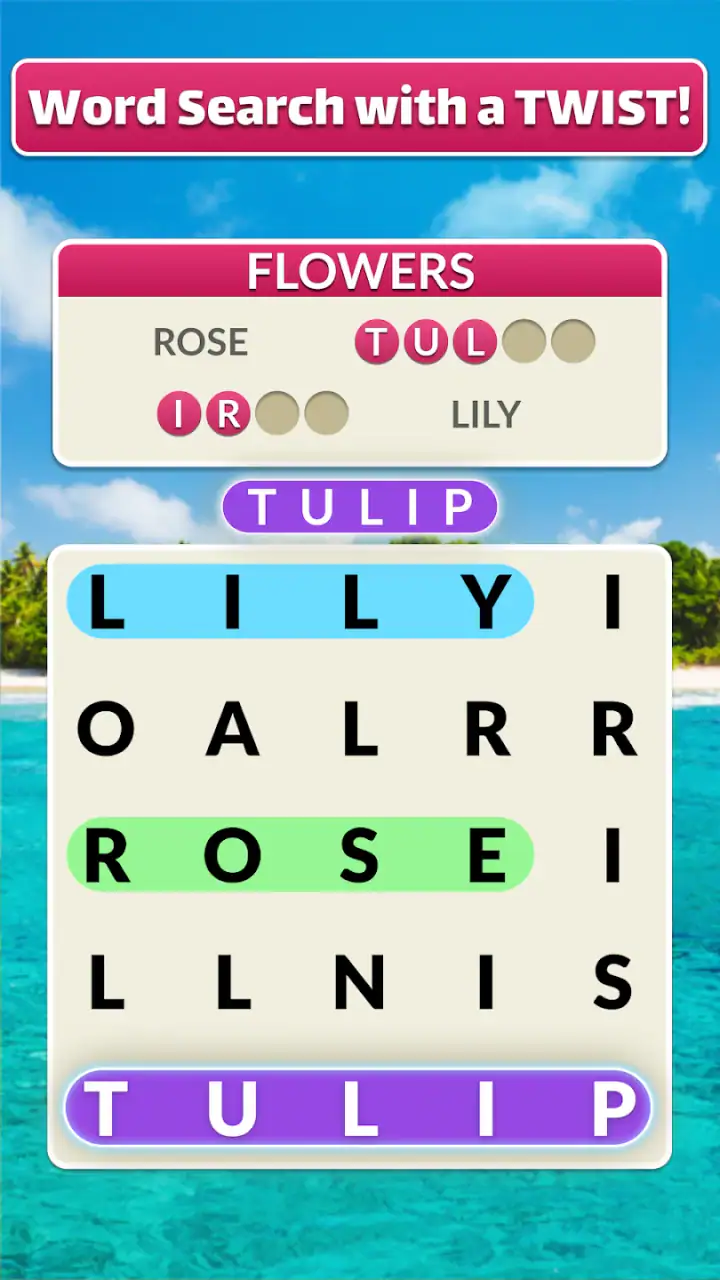
The current release is version 1.90.0, and the overall experience feels established rather than experimental. The game gets to its central puzzle quickly, which matters on a phone. I do not need to study a long tutorial before understanding what to do: words are hidden in a letter grid, and I search for them by tracing the appropriate sequence. That familiar structure makes the game approachable for children, older players, and people who rarely play mobile games.
The travel framing gives the progression a little more personality than a plain collection of disconnected grids. Moving through different locations creates a reason to continue beyond a single puzzle, even though the lasting attraction is still the act of spotting words. I found that useful because it adds light context without burying the puzzle under story scenes or complicated menus.
Its age rating is Everyone, which matches the gentle presentation and straightforward word-play focus. I would still choose puzzles carefully for a very young child, not because the content feels unsuitable, but because vocabulary difficulty can vary and independent reading ability will make a big difference. For adults, the rating mainly confirms that this is a broadly accessible game rather than an intense or mature title.
Related News






The game is free to install, so trying it does not require an upfront purchase. There are in-app purchases ranging from $0.99 to $99.99 per item, which is important for anyone who prefers completely predictable spending. I recommend treating optional purchases as a convenience rather than part of the basic reason to install it. If you are comfortable enjoying a free puzzle game at its natural pace, you can approach it without assuming that buying something is necessary.
A useful fit for short, interrupted sessions
One of the strongest practical qualities is how well the format fits fragmented time. Imagine waiting for a train with ten minutes to spare. A word-search puzzle gives you a clear activity that can begin immediately, and finishing one grid provides a natural stopping point. The same works during a lunch break or while waiting for an appointment. I prefer this to a game that demands a long uninterrupted run, especially when I know I may need to lock my phone at any moment.
It also works as a transition activity. I sometimes use word puzzles after a busy stretch of work because they occupy my eyes and hands without asking me to make strategic decisions every second. The search process is active enough to prevent boredom but familiar enough not to create another source of pressure. That balance is where the “Zen” idea makes sense to me: the calm comes from the predictable task, not from the game being completely effortless.
Gallery
There is a small trade-off, though. Players who want a strong sense of achievement from every session may find the basic loop too modest. Finishing a grid feels satisfying, but it is a quiet satisfaction. This is not the right choice if you need elaborate objectives, dramatic rewards, or a competitive leaderboard to stay interested.
What makes the word search more approachable
Classic word searches are easy to understand, but they can become visually tiring on a small screen. I found that the best way to play is to slow down instead of dragging quickly across the grid. I first scan for unusual letters or likely word beginnings, then check the surrounding directions. This reduces random swiping and makes difficult boards feel more like a process than a guessing contest.
A second useful habit is to search by shape rather than reading every letter in order. Longer words often stand out because they create a clear line across the grid, while shorter words are easier to miss among similar combinations. I also revisit the remaining word list after each discovery instead of continuing to stare at the same area. That simple reset helps when the puzzle starts to blur visually.
These are not flashy features, but they change how enjoyable the game feels. Word Search Zen rewards patient observation more than frantic tapping. If you normally dislike word searches because you get stuck scanning the same section, taking a structured approach makes a noticeable difference.
How the travel theme affects progression
The global travel concept adds a gentle sense of direction. Rather than treating each board as an isolated exercise, the game presents the puzzles as part of a wider journey. I like that this gives the session a little narrative movement without forcing me to follow a story or remember character details. It is a light motivational layer, not the main event.
That distinction matters when comparing it with other word-game styles. Crossword apps usually ask for clues and vocabulary recall, while anagrams focus on rearranging letters and often reward rapid responses. Word Search Zen is more visual and less dependent on producing an answer from memory. Someone who knows a lot of words but dislikes clues may prefer this format; someone who wants language learning or deeper definitions may get more value from a crossword or vocabulary app.
Compared with a paper word-search book, the phone version is more convenient for carrying around and easier to use in a short break. Paper still has advantages for people who enjoy marking pages, avoiding screens, or working without digital interruptions. Compared with a competitive word game, this one is less stressful but also less socially engaging. The best alternative depends on whether you want calm observation, vocabulary challenge, or head-to-head pressure.
What the release information suggests about its evolution
The game was released on July 3, 2023, and its current version shows that it has continued to move forward since its initial arrival. I would not interpret a version number alone as proof of a particular feature, but it does suggest that the app is being maintained as an ongoing product rather than left as a one-time puzzle collection. For a casual game, that matters because continued maintenance can make the experience feel more dependable over time.
For existing players, the most important effect of an updated release is usually continuity. A player who already enjoys the travel-based word-search loop can return to the same basic style without having to relearn an entirely different game. New users benefit in a different way: they are joining a product with an established identity, not an untested concept that may change direction immediately.
I would keep expectations realistic, however. A current version does not automatically mean that every personal request has been addressed. If your decision depends on a particular accessibility option, a specific offline workflow, or a certain competitive mode, you should check the current in-app experience on your device before committing time or money. Those details can matter more than the release number itself.
The game supports devices running Android 7.0 or later, which gives it a relatively broad reach among Android users. That is helpful if you keep an older phone for travel or prefer not to upgrade hardware frequently. On a smaller or older device, I would pay attention to readability and touch accuracy during the first few puzzles. Word searches rely on seeing small letters clearly, so screen comfort can be more important than raw performance.
Where the present experience is strongest
The clearest strength is focus. The game knows that a word search works because the player can understand the goal instantly. The travel presentation adds flavor, but it does not overwhelm the grid. I can concentrate on looking for patterns, and the game remains suitable for a quick session even when I am not in the mood to learn a new system.
It is also a good choice for mixed-age households. An adult can play casually, while a child who enjoys spelling and visual puzzles may find the same basic activity approachable. I would use it as a shared quiet activity rather than as a formal learning tool. It can encourage attention to spelling, but it should not replace a structured vocabulary exercise if education is the main goal.
Another strength is the low commitment. I do not need to remember a complex inventory, maintain a long chain of strategic choices, or coordinate with other players. That makes it particularly suitable for people who want a game that respects their available time. The downside is that the same simplicity may feel repetitive to players who need constant novelty.
Remaining friction before you install
The biggest limitation is inherent in the genre: once the pleasure of finding words wears off, there may not be enough variety in the central action to bring you back. The travel theme can encourage progression, but it cannot completely transform a word search into a different kind of game. If you already know that repeated letter grids bore you, this app is unlikely to change your mind for long.
The purchase range also deserves a careful approach. Free-to-play puzzle games can be enjoyable without spending, but optional items may appeal when a player is stuck or wants to move ahead more conveniently. I suggest deciding your boundary before playing. Turning off impulse purchasing at the device level, where available, is sensible for family devices, especially when children may use the same phone or tablet.
I would also avoid judging the game only by its rating. It has an average rating of 4.9 from around 28 thousand ratings, and it has accumulated roughly 1.5 thousand written reviews, which indicates strong reception. Those figures tell me that many players enjoy the experience, but they do not guarantee that its calm, repetitive format will match your taste. A highly rated word search can still be the wrong choice for someone seeking story, action, or serious vocabulary training.
The game has passed 500 thousand installs, giving it a meaningful player base without making popularity the deciding factor. For me, the more useful question is whether the basic loop fits the way I use my phone. If I want a dependable solo distraction, the answer is probably yes. If I want social interaction or a deep challenge, I would look elsewhere.
Who should choose it and who should skip it
I would recommend it to people who like traditional word searches, enjoy travel-themed progression, and want a game that can be played in small pieces. It is especially suitable for commuters, casual puzzle fans, and players who prefer visual recognition over clue solving. It can also be a pleasant option for someone returning to mobile games after a long break because the controls and objective are easy to grasp.
I would skip it if you need a strong multiplayer component, detailed word definitions, or a demanding strategic system. Crossword fans who want clues and cultural knowledge may find the grids too direct. Anagram fans who enjoy speed and word construction may find the search process too slow. People who dislike optional-purchase systems should also approach it carefully and decide whether a free-to-play structure is comfortable for them.
For a family member with reduced vision, I would test the letter size and contrast personally rather than assuming that a simple interface will be comfortable. For a child, I would play a few puzzles together and see whether the vocabulary is appropriate for their reading level. These small checks are more useful than relying only on the Everyone label.
What I would watch as the game continues
As the product evolves, I would pay attention to whether new releases preserve the clean puzzle focus while adding meaningful variety. More destinations can make the journey feel fresh, but variety in board design, vocabulary, and pacing would matter even more to long-term players. I would also value improvements that make extended sessions easier on the eyes and hands, because word searches naturally involve repeated scanning and dragging.
I would watch the balance between free progression and optional purchases as well. The best version of this kind of game lets casual players enjoy a steady rhythm without feeling pushed to spend whenever a puzzle becomes difficult. Players who already like the current loop will probably care less about dramatic changes than about fair pacing and a comfortable return experience.
My final view is positive but specific. Word Search Zen is not trying to replace every other word game, and it should not be judged by the standards of a crossword, an anagram race, or a story-driven adventure. Its value is in making a familiar search puzzle easy to carry, easy to understand, and pleasant to revisit. I would install it for calm, flexible sessions and recommend it to a friend who enjoys spotting hidden words while travelling through a light global theme. I would not recommend it to someone searching for deep strategy or constant novelty. Its best feature is the simple promise that a few spare minutes can become a focused, satisfying puzzle break.
FAQs for Word Search Zen
What is Word Search Zen, and how does the game work?
Word Search Zen is a relaxing word puzzle game in which you find hidden words inside a grid of letters. Players typically swipe across letters horizontally, vertically, or diagonally to complete each puzzle. The game combines traditional word-search mechanics with calming visuals, gentle sound effects, and a low-pressure atmosphere, making it suitable for short sessions or longer, more focused play.
Is Word Search Zen free to download and play?
Word Search Zen can generally be downloaded for free, but the available features may depend on the version installed from the Android or iOS store. Free gameplay may include optional advertisements, in-app purchases, or premium content such as extra puzzle packs and ad removal. Before downloading, check the store listing for current pricing, subscription details, and any purchase requirements.
Does Word Search Zen require an internet connection?
Many word-search puzzles can usually be played offline after the application has been installed, which is convenient when traveling or when mobile data is unavailable. However, an internet connection may still be needed for downloading new content, displaying advertisements, synchronizing progress, restoring purchases, or accessing certain online features. Offline availability can vary between versions and devices.
Is Word Search Zen suitable for children and beginners?
Word Search Zen is generally easy to understand because its main objective is simply to locate and select hidden words. The relaxing pace can make it suitable for beginners, casual players, and families. Parents should still review the app’s age rating, advertising, privacy information, and in-app purchase settings, since the exact content and permissions may differ depending on the platform.
What are the main advantages and possible drawbacks of Word Search Zen?
The main advantages of Word Search Zen are its simple controls, relaxing presentation, and broad accessibility for players who enjoy vocabulary puzzles without complicated rules. It can be useful for passing time and practicing word recognition. Possible drawbacks include repetitive gameplay, advertisements in the free version, limited challenge for advanced players, and premium puzzles or features that may require additional payment.
Pros
- Relaxing gameplay with a calm
- low-pressure atmosphere
- Large variety of word puzzles for casual play
- Simple controls make it easy to start immediately
- Suitable for short sessions or longer puzzle breaks
- Helps improve vocabulary and spelling recognition
Cons
- Some puzzles may feel repetitive after extended play
- Difficulty can vary noticeably between individual levels
- Hints or extra features may be limited without rewards
- Ads may interrupt the experience on the free version
- Small text can be less comfortable on some phone screens


